Fight over evidence in Alex Murdaugh retrial turns to DNA and missing murder weapons
(AP) — Prosecutors and lawyers for Alex Murdaugh returned to court on Friday amid escalating disputes over evidence for his retrial next year on murder charges.

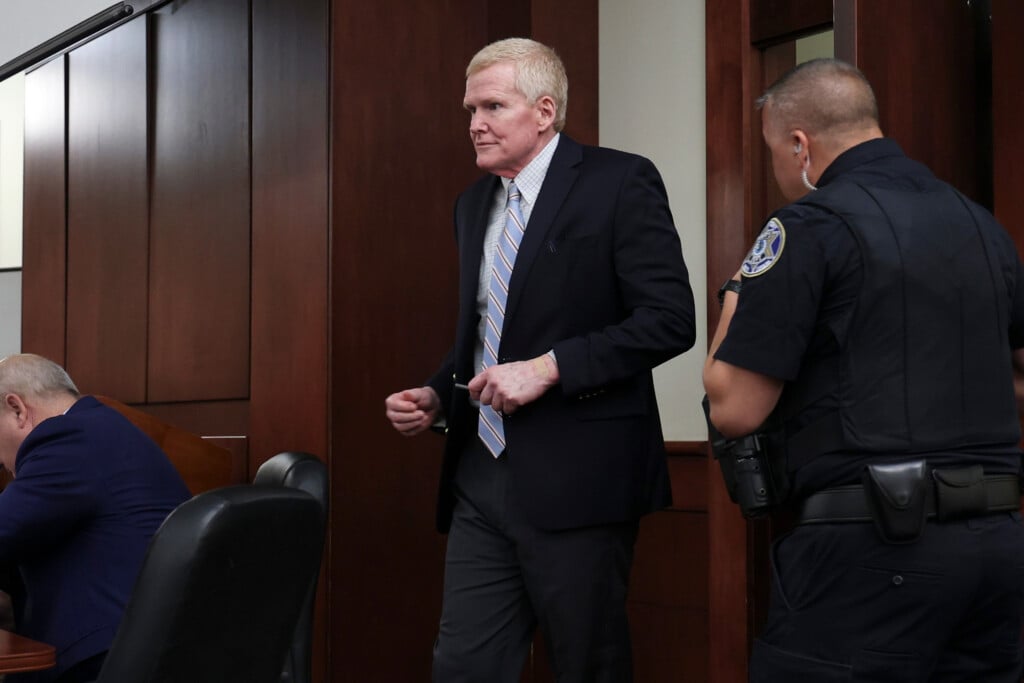
FILE – Alex Murdaugh enters the courtroom for a hearing, Aug. 14, 2026, at the Marc H. Westbrook Judicial Center in Lexington, S.C. (Tracy Glantz/Pool Photo via AP, File)
Murdaugh, a once-rich and imposing heir to a Southern legal dynasty, is scheduled to stand trial again in April on two murder charges in the June 2021 shooting deaths of his wife, Maggie, and younger son, Paul, at their home in Colleton County. Murdaugh, 58, was in court Friday in a suit as he serves a lengthy prison sentence after pleading guilty to stealing from clients.
The killings and his six-week trial in 2023 captivated the true crime world with a mix of treachery, corruption, money, power and Southern accents. While admitting he is a thief, insurance cheat, bad lawyer and longtime opioid addict, Murdaugh has adamantly denied the killings.
The South Carolina Supreme Court overturned his convictions earlier this year, ruling that a court clerk influenced jurors during his trial. The clerk told jurors to watch Murdaugh’s body language and not be fooled when he testified in his own defense.
Hearing was called after defense lawyers complained about evidence
The judge called Friday’s hearing after Murdaugh’s lawyers filed a flurry of motions saying prosecutors were dragging their feet sharing evidence. They said it threatened to delay the April 5 retrial date that Judge Debra McCaslin is determined to keep. Prosecutors said the disputes were mostly misunderstandings.
Both sides are expected to argue whether defense DNA experts can test the rest of a sample of genetic material found under the fingernails of Murdaugh’s wife. They’re also expected to argue over whether authorities must turn over ballistics and other evidence from shootings in eight surrounding counties involving the same type of gun as one of the weapons used in the killings.
Defense wants to know if prosecutors now think someone else was at the scene
Very little may be said about the most intriguing dispute of all.
Defense lawyers want to know whether prosecutors have called a grand jury to investigate a police officer who was friends with Murdaugh. Defense attorneys said that prosecutors suggested the officer arrived at Murdaugh’s home before other law enforcement officers and could have helped him hide bloody clothes or the weapons used in the killings. Neither the clothes nor the weapons have been found.
Murdaugh’s lawyers said the evidence is critical because prosecutors argued during his first trial that he acted alone. Prosecutors said no one else was at the home between the killings and Murdaugh’s return from visiting his mother, when he called 911 to report the shootings.
The defense says another person’s involvement would cast doubt on testimony from witnesses who said at Murdaugh’s first murder trial that he acted alone. Murdaugh’s lawyers also demanded any evidence prosecutors have of possible accomplices or a grand jury investigation into them.
In response, prosecutors declined to say whether any evidence exists, citing legal restrictions on disclosing whether a grand jury is meeting.
Both sides get cranky in court filings
Prosecutors and the defense have been getting crankier in their court filings.
After Murdaugh’s lawyers accused the state of not sharing cellphone data, prosecutors wrote, “It’s hard to understand the inexplicably brazen and highly prejudicial falsehoods the defense puts in its public filings (or, as previously seen, on the record in open court). It is stunning, really. Facts matter.”
And when prosecutors offered all the data from a computerized scan of the crime scene before the hearing, Murdaugh’s lawyers wrote in their response, “The defense is glad to hear it. It wishes only that the State had said so a month ago.”
While pretrial hearings are being held in Lexington County, the retrial has been moved to Sumter County, east of Columbia and about 80 miles (129 kilometers) from Colleton County. The judge determined that extensive publicity surrounding the case in Murdaugh’s home county could prevent a fair retrial.
Regardless of what happens in his next murder trial, Murdaugh will remain in prison. He pleaded guilty to stealing around $12 million from his clients and is currently serving a 40-year federal sentence concurrently with a 27-year state sentence for his financial crimes.