What comes next after Andrews’ Senate win as SC Democrats eye 2028 battleground
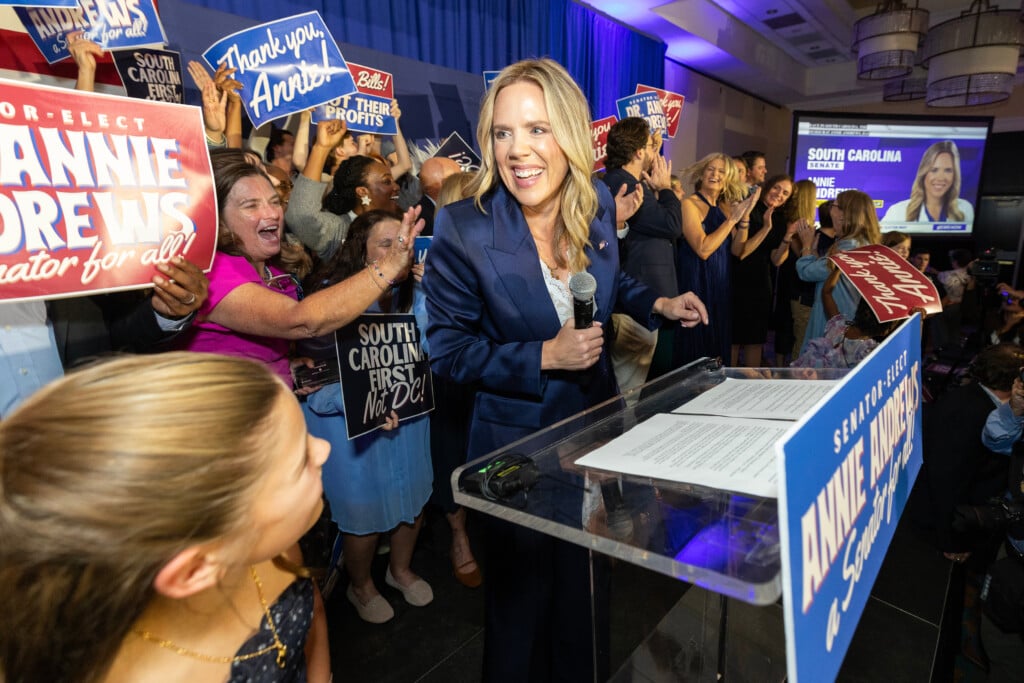
(WCIV) — If anyone asks the South Carolina Democratic Party, Dr. Annie Andrews’ electoral victory over incumbent interim Sen. Darline Graham marks a dramatic shift in the Palmetto State.
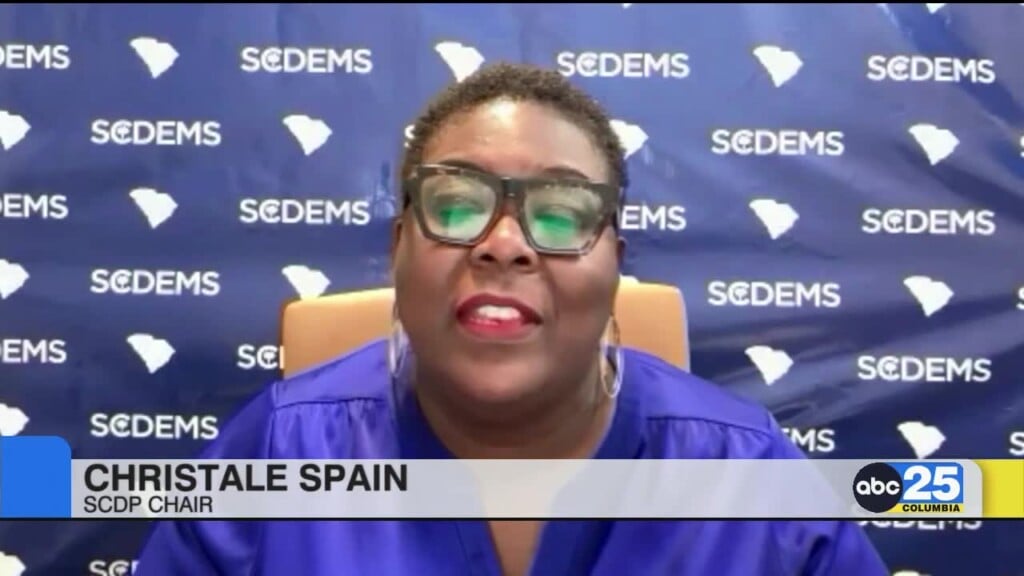
Christale Spain, the party chair, said the same on the Wednesday after Election Day.
“It feels good to win,” Spain said. “But I think Sen. [Raphael] Warnock is right. If we are going to change this country, we have to start winning in the Deep South. And we proved that we can do that. We proved that in North Carolina with lots of investment, in Georgia with lots of investment, and right here in South Carolina with limited investment.”
On the surface, Spain is right. No Democrat in South Carolina has won a Senate seat this century. Additionally, a liberal hadn’t won a Senate seat in the state since Reconstruction.
But context matters.
South Carolina was part of a national trend for Democrats winning in places previously believed to be Republican strongholds. The statewide party capitalized on President Donald Trump’s historic unpopularity. But adding another wrinkle to the race was Trump’s handpicked candidate in Graham.
Graham was a political novice when the death of her brother, the late Sen. Lindsey Graham, in July thrust her into the political limelight. Originally expected to serve as a caretaker for the remainder of her older brother’s term, the president urged Darline Graham to seek a six-year term.
Trump placed his hands on the scale of a special GOP primary that ended in a bitter runoff against U.S. Rep. Ralph Norman, where the president campaigned heavily for Graham. Norman ultimately lost. The staunch conservative then never joined Graham on the campaign trail and, at times, picked at her, fueling skepticism about her ability to serve a full term in the U.S. Senate.
And to Republicans in the state, it was the lack of enthusiasm, typified by Norman, that explains how Andrews could win while the GOP still claimed other statewide offices like governor and attorney general.
“The story of the night isn’t that South Carolina is getting materially bluer; it’s that we weren’t able to turn out the statewide vote we normally do,” Tyson Grinstead, the Republican national committeeman for South Carolina, said to The Guardian. “There were 500,000 people who voted in the 2024 presidential election who did not come back in the midterm. Of that 500,000, 400,000 were Republicans.”
Those conditions haven’t changed the state’s Democratic Party from remaining bullish on what is in the realm of possibility for the 2028 election cycle. South Carolina holds its first-in-the-nation status for the Democratic Primary. National-level Democrats routinely visit the state. And Spain wants to put them on notice that they are coming to a “battleground.”
“They are not just coming to a southern state that has a different electorate,” Spain added. “They are coming to a battleground state. We battle-test candidates because South Carolina is a proxy for so many voters. We now have this stamp where we have this U.S. Senator.”
By fielding candidates for all 124 Statehouse races and every constitutional office, Democrats broke the Republican supermajority in state governance by winning 10 contested races. The party now has 45 seats in the Statehouse. What hasn’t changed is trifecta-led governance under the GOP. But Democrats want Republican lawmakers to know they are getting closer.
“As we look to 2028, you take our ability to be first in the nation. You have all of these presidential visits coming,” said Jay Parmley, the executive director of the South Carolina Democratic Party. “We have this great opportunity to organize, and we’ve got about 25, 26 House seats that we’re already talking about our ability to invest in for 2028.”
Although Democrats were victorious, South Carolina state Sen. Shane Massey, a Republican who opposed his party’s mid-decade redistricting efforts and serves as his party’s majority leader, cautioned that one win does not indicate the state’s political direction.
“South Carolina is not a Democratic or purple state; South Carolinians remain a conservative lot,” Massey told The Guardian. “Senator-elect Andrews’s victory shouldn’t be confused with broad ideological support for her platform. It was primarily a rejection of the alternative and a desire to send a message. Voters expect their officials, Republican or Democrat, to address real problems rather than just screwing around.”