For the Health of It: PSEUDO-STROKE / STROKE MIMICS: Understanding the Symptoms
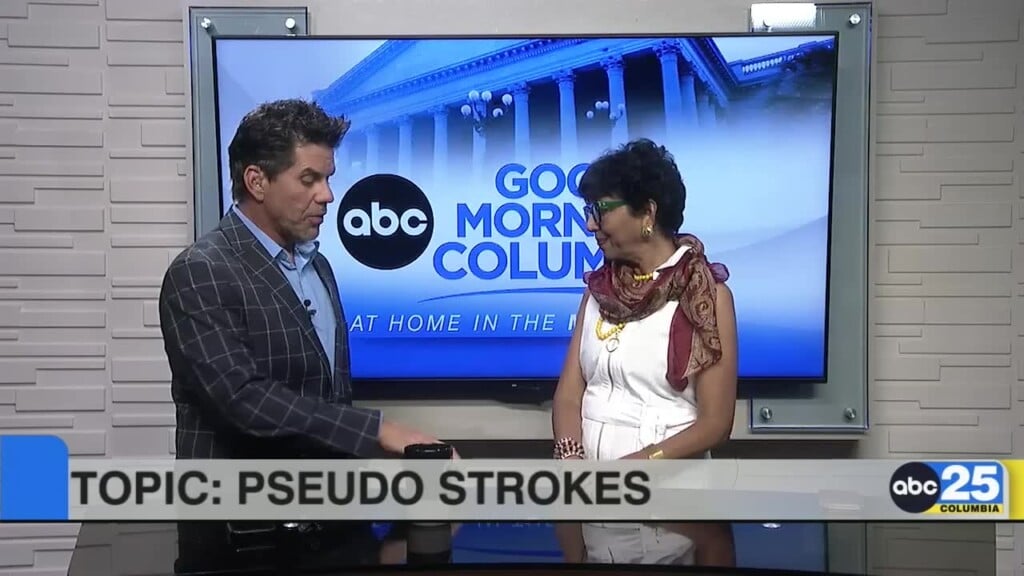
Tyler Ryan and Hima Dalal discuss treatments and symtoms of pseudo strokes
COLUMBIA SC (WOLO) –
Stroke-like symptoms can occur even when the underlying problem is not an actual stroke. These are sometimes referred to as stroke mimics or “pseudo-stroke.”
What can cause stroke-like symptoms?
Some possible causes include:
• Migraine with aura
• Seizures or post-seizure effects
• Low blood sugar or other metabolic disturbances
• Medication effects or intoxication
• Infections or systemic illness
• Vestibular disorders causing dizziness and imbalance
• Functional neurological disorder (FND)
• Severe stress or psychological factors
⚠️ Important: Sudden facial drooping, arm or leg weakness, numbness, speech difficulty, vision changes, severe dizziness, or loss of coordination can also be signs of a true stroke. Call 911 immediately—do not assume it is a pseudo-stroke.
Traditional Therapy Approach
After medical evaluation and diagnosis, rehabilitation may include:
✔️ Occupational Therapy for activities of daily living
✔️ Physical Therapy for strength, balance and mobility
✔️ Speech Therapy for communication and swallowing
✔️ Neurological rehabilitation
✔️ Cognitive and executive-function training
✔️ Education, adaptive strategies and safety training
🌿 Integrative Occupational Therapy Approach
At Hima Dalal Integrative Health, Integrative OT looks at the whole person—body, mind, emotions, environment and meaningful daily occupations.
Depending on the individual’s diagnosis and medical clearance, the approach may incorporate:
✨ Functional OT and neurological rehabilitation strategies
✨ Breathwork, mindfulness and meditation
✨ Gentle yoga and movement
✨ Myofascial Release and Crystal Myofascial Release (CMFR)
✨ Craniosacral Therapy
✨ Energy-based wellness practices
✨ Relaxation and self-regulation strategies
✨ Gradual return to meaningful activities and routines
The goal is to help a person regain confidence, improve participation in daily life, develop self-regulation and reconnect with meaningful occupations—while working alongside their medical and rehabilitation team.